Signage and Neon Flex: Why Constant Voltage with IP65/IP67 Dominates
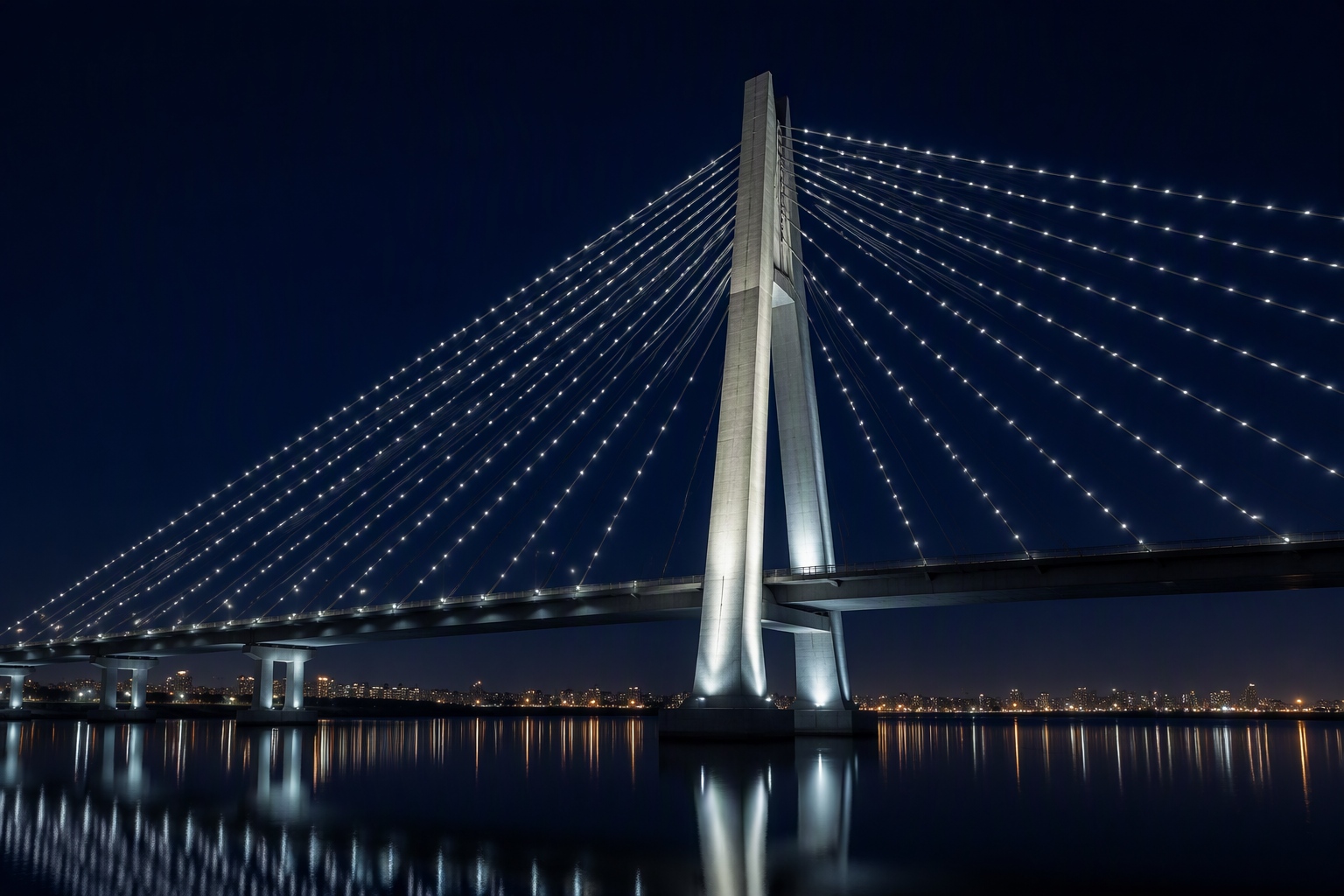
Walk through any city at night and the illuminated signage tells the story of the LED driver market. Channel letters, neon-flex outlines, edge-lit signs, and string lighting are almost all fed by constant-voltage drivers, and the ones that survive outdoors are almost all IP65 or IP67. Understanding why that pairing is so common explains the product category itself.
Signage uses low-voltage LED modules and neon flex because they are safe, thin, and easy to fabricate. A channel letter is a metal outline filled with a row of 12 V or 24 V modules, each with its own current regulation built in. Neon flex is a silicone tube containing a strip of surface-mount LEDs with series resistors or integrated regulators. Both are designed to be powered from a fixed DC rail, which is exactly what a constant-voltage driver provides. There is no need to set a current; the load regulates itself.
The waterproof requirement is not optional for most signage. Exterior signs live outdoors, exposed to rain, splash, condensation, and pressure washing. A driver that fails in the sign means the sign goes dark, and a dark sign on a storefront is lost revenue, not just a light outage. IP65 handles splashing and low-pressure jets; IP67 adds temporary immersion, which matters for ground-level sign bases, canopy valances, and locations that flood. The IP rating is the difference between a sign that stays lit for a decade and one that fails in the first wet season.
The 12 V versus 24 V decision inside signage mirrors the strip-lighting logic. 24 V halves the current for the same wattage, which reduces voltage drop over the internal runs and lets the sign builder use thinner, cheaper wiring. 12 V remains common where the modules themselves are 12 V components, but 24 V has become the default for longer runs and larger signs. The driver's output voltage has to match the modules; it is not interchangeable without changing the whole sign.
Signage also benefits from the 5-in-1 dimming capability, though for a different reason than a bedroom lamp. Many signs are dimmed at night, either to reduce glare, to save energy, or to comply with local dark-sky ordinances. A driver that accepts triac, 0-10V, and resistive inputs lets the sign integrator dim the sign from an existing wall dimmer, a photocell, or a time clock without adding a proprietary control system. One driver covers the dimming method the integrator happens to choose.
The failure mode that hurts signage is the same one that hurts all outdoor lighting: water ingress through the cable entry, and heat. A sign driver is often mounted inside the sign housing, which can be a sealed metal box that bakes in the sun. The thermal derating and the OTP protection discussed elsewhere are what keep a 60 W driver alive in a sign that reaches 60 degrees. Buyers of signage drivers should check the derating at the sign's worst-case ambient, because a driver that is sized correctly at the bench is often undersized inside a hot sign housing.
The specification habit that separates a good sign from a failing one is simple: size the driver for the actual module count, not the sign's overall brightness claim. Channel letters and neon flex are sold by length and by module count, and each draws a specific wattage. Adding up those figures, adding the same 20 percent margin used for strip lighting, and checking the worst-case summer ambient in the sign housing will select a driver that runs cool and lasts. Skipping the count and guessing from the sign's wattage rating is how a sign goes dark in its first hot summer, long before the driver's warranty would cover it.
Two-Stage vs Single-Stage Topology: How a Driver's Internals Shape Its Performance
Feeding Long Strips: Parallel Taps, Load Sharing, and Balanced Wiring