LED driver technology advances large-screen displays
2024-05-14
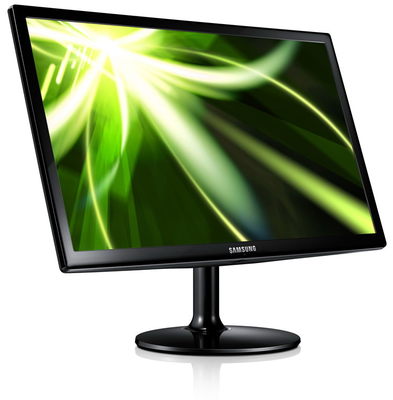
LED driver technology is playing a key role in the development of large-screen displays, which are becoming increasingly popular in various applications such as digital signage, sports arenas, concerts, and conferences. LED drivers, which regulate the current and voltage delivered to the LEDs that form the pixels of the display, are critical to achieving high brightness, contrast, color accuracy, and energy efficiency. According to a new report by MarketsandMarkets, the global market for LED driver ICs will grow from $7.9 billion in 2020 to $12.5 billion by 2025, driven by the increasing demand for large-screen displays.
One recent example of LED driver innovation is the proposal by researchers at the Hong Kong University of Science and Technology (HKUST) to use dynamic voltage scaling (DVS) to improve the efficiency and lifespan of LED displays. The research team, led by Prof. Wei-Heng Shih, found that by reducing the supply voltage of the LED strings in an active matrix display, they could reduce the power consumption and thermal stress of the LEDs, hence extending their lifetime. The team also developed a DVS-enabled LED driver chip for the display, which can adjust the voltage according to the image content, resulting in up to 36% power saving without sacrificing image quality. The proposed technology, according to the researchers, could be applied to various display formats, including microLEDs, OLEDs, and quantum dot displays.
Another example of LED driver innovation is the use of chip-scale packaging (CSP) to achieve higher power density, smaller footprint, and lower cost. CSP allows the integration of multiple components, such as the driver IC, passive components, and protection features, into a single chip, reducing the number of external components, improving the impedance matching, and enabling higher frequency operation. This enables LED driver makers to offer more compact and flexible solutions for different display configurations, such as curved, flexible, and transparent displays. For example, Texas Instruments recently introduced a 4-channel LED driver with CSP technology, which can deliver up to 1.5A per channel to four separate LED strings, while occupying a space of only 3.5mm x 3.5mm. The driver is suited for high-resolution displays that require precise current control and dimming functions.
LED driver technology is also evolving to meet the specific requirements of different display applications, such as outdoor displays that face harsh environmental conditions and require high brightness, contrast, and reliability, and indoor displays that demand low latency, high refresh rate, and accurate color reproduction. For example, some LED drivers can support gamma correction, color temperature adjustment, and dynamic color rendering, to enable more vivid and natural images. Others can support advanced features such as HDR (high dynamic range), MEMC (motion estimation/motion compensation), and 3D effect, to enhance the viewing experience.
In summary, LED driver technology is a key enabler of large-screen displays, which are transforming the way we consume and communicate information. By improving efficiency, lifespan, flexibility, and performance, LED driver makers are creating new opportunities for displaying content in diverse contexts, from smart cities to virtual studios. The advancement of LED driver technology is also contributing to the reduction of carbon emissions and the improvement of sustainability of the display industry. As demand for high-quality displays grows, LED driver makers will continue to innovate and collaborate with other stakeholders to enhance the value of visual communication.
One recent example of LED driver innovation is the proposal by researchers at the Hong Kong University of Science and Technology (HKUST) to use dynamic voltage scaling (DVS) to improve the efficiency and lifespan of LED displays. The research team, led by Prof. Wei-Heng Shih, found that by reducing the supply voltage of the LED strings in an active matrix display, they could reduce the power consumption and thermal stress of the LEDs, hence extending their lifetime. The team also developed a DVS-enabled LED driver chip for the display, which can adjust the voltage according to the image content, resulting in up to 36% power saving without sacrificing image quality. The proposed technology, according to the researchers, could be applied to various display formats, including microLEDs, OLEDs, and quantum dot displays.
Another example of LED driver innovation is the use of chip-scale packaging (CSP) to achieve higher power density, smaller footprint, and lower cost. CSP allows the integration of multiple components, such as the driver IC, passive components, and protection features, into a single chip, reducing the number of external components, improving the impedance matching, and enabling higher frequency operation. This enables LED driver makers to offer more compact and flexible solutions for different display configurations, such as curved, flexible, and transparent displays. For example, Texas Instruments recently introduced a 4-channel LED driver with CSP technology, which can deliver up to 1.5A per channel to four separate LED strings, while occupying a space of only 3.5mm x 3.5mm. The driver is suited for high-resolution displays that require precise current control and dimming functions.
LED driver technology is also evolving to meet the specific requirements of different display applications, such as outdoor displays that face harsh environmental conditions and require high brightness, contrast, and reliability, and indoor displays that demand low latency, high refresh rate, and accurate color reproduction. For example, some LED drivers can support gamma correction, color temperature adjustment, and dynamic color rendering, to enable more vivid and natural images. Others can support advanced features such as HDR (high dynamic range), MEMC (motion estimation/motion compensation), and 3D effect, to enhance the viewing experience.
In summary, LED driver technology is a key enabler of large-screen displays, which are transforming the way we consume and communicate information. By improving efficiency, lifespan, flexibility, and performance, LED driver makers are creating new opportunities for displaying content in diverse contexts, from smart cities to virtual studios. The advancement of LED driver technology is also contributing to the reduction of carbon emissions and the improvement of sustainability of the display industry. As demand for high-quality displays grows, LED driver makers will continue to innovate and collaborate with other stakeholders to enhance the value of visual communication.


Enhancing Hospital Lighting Efficiency and Quality with DALI Dimming Power Supply
"Optimizing LED Strip Lighting with High-Quality LED Drivers"
Related Article